Does ethical fashion have a white savior complex? Power and representation in the movement
The phrase "white savior" describes a familiar pattern: people from wealthy, mostly white societies casting themselves as rescuers of people in poorer countries, while keeping the decisions, the visibility and the rewards for themselves. It is a fair question to put to ethical fashion, a movement largely led and consumed in the Global North about a workforce largely located in the Global South. The answer is not a simple yes or no, but asking it makes the movement better.
The geography of the problem
Clothing production is concentrated in a small number of countries, most of them in Asia. The International Labour Organization estimated that in 2019 the Asia-Pacific region alone accounted for about 75% of the world's garment, textile and footwear workers, and that globally about 80% of garment workers are women. The largest markets, the most influential brands and the best-known sustainability organisations, meanwhile, are mostly based in North America and Europe.
That imbalance shapes everything else: who designs, who sets prices, who writes the codes of conduct, who audits factories, who appears in campaigns and who is quoted in the press. The people with most at stake are often the least heard.
How workers are portrayed
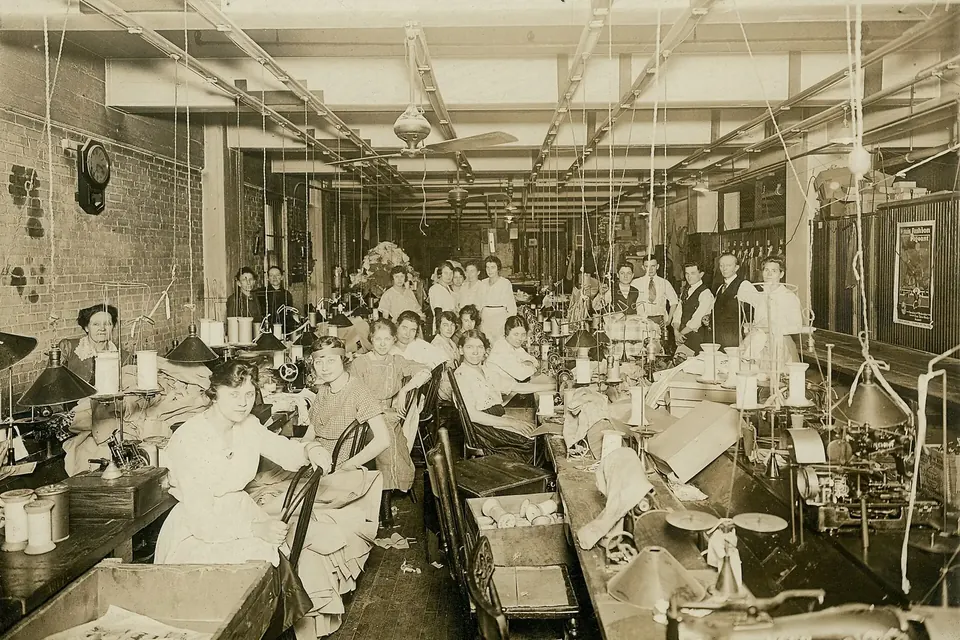
Ethical-fashion communication often relies on images of garment workers as victims: anonymous, silent, in need of help from concerned consumers. Disasters such as the Rana Plaza collapse in 2013 rightly drew global attention. But workers are not only victims. Garment workers in many countries organise unions, strike, negotiate and run their own campaigns, often at real personal risk. Enforceable agreements such as the Bangladesh Accord were negotiated with trade unions, not handed down by concerned shoppers.
When communication centres the conscience of the buyer rather than the demands of the worker, it can turn a labour issue into a charity story. The practical difference is significant: charity asks for gratitude, while labour rights ask for wages, safety and a voice.
Artisans, "empowerment" and ownership
Many ethical brands work with artisan communities: weavers, embroiderers, dyers, leather workers. At their best, these partnerships pay fairly, respect traditional knowledge and open new markets. At their worst, they reproduce old hierarchies in a new vocabulary:
- The brand's founder is presented as the creative visionary; the artisans are anonymous hands.
- Traditional designs are adapted and sold without credit, permission or a share of the profit.
- "Empowerment" is claimed while the community has no ownership, no say in pricing and no security of orders.
- The story told to customers is about the brand's generosity, not about the artisans' skill.
Questions worth asking of any artisan collaboration: who owns the business and the designs, who sets the price, how much of the retail price reaches the makers, and are they named and credited?
Where our old clothes go
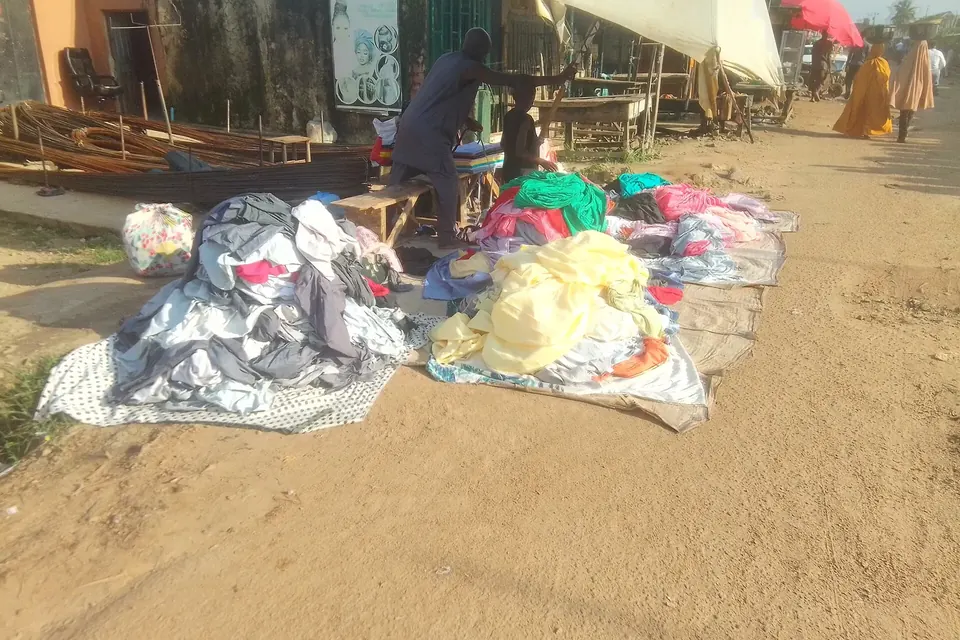
Representation is also a question of who bears the costs. Clothing that people in wealthy countries donate or discard does not disappear. The Ellen MacArthur Foundation noted that even in countries with high collection rates, such as Germany, which collects 75% of its textiles, much of the collected clothing is exported to countries with no collection infrastructure of their own, and most of it eventually ends up in landfill or in lower-value uses. A peer-reviewed commentary in Environmental Health by Bick, Halsey and Ekenga (2018) described fast fashion as a global environmental-justice dilemma: workers and communities near production bear disproportionate health hazards, and low- and middle-income countries receive large volumes of textile waste through second-hand markets while often lacking the resources to manage it.
Second-hand markets are also livelihoods for traders, tailors and repairers, and many are vibrant economies in their own right. The problem is not second-hand trade itself, but the volume and declining quality of what is sent, and the assumption that discarded clothing is someone else's problem.
Who leads the movement
Ethical fashion has its own representation problem at the top. Conferences, award juries, campaign faces and media coverage have often been dominated by a narrow group of mostly white, mostly Western voices, and price points have often been out of reach for most people. Critics within the movement have pointed out that sustainable practices such as mending, re-wearing, buying second-hand and handing down clothes have long been ordinary in working-class and many non-Western communities, long before they were rebranded as a lifestyle choice.
What a more equal movement looks like
- Workers' organisations at the table, as negotiating parties rather than as case studies, in codes, audits and agreements.
- Enforceable commitments with independent oversight, rather than voluntary pledges.
- Fair purchasing practices: prices and lead times that make legal wages and safe production possible.
- Credit and ownership for designers and artisans in producing countries, including protection of traditional knowledge.
- Representation of producing-country designers, workers and experts in media, juries and leadership.
- Responsibility for waste in the countries that consume, through extended producer responsibility and less overproduction. The EU's revised Waste Framework Directive, in force since October 2025, makes such schemes mandatory for textiles in every member state.
- Accessible sustainability that values repair and second-hand as much as expensive new "eco" collections.
So, does it?
Parts of the ethical-fashion movement have certainly shown the pattern: rescue narratives, invisible makers, leadership that looks very different from the workforce. But the movement is not one thing, and it has also produced some of the most important workers' gains in the industry, through alliances with unions. The question is useful precisely because it shifts attention from what consumers feel to what workers get. A movement that keeps asking it is less likely to become what it describes.
Ethical fashion works best when it stops speaking for workers and starts standing with them.
Sources
- International Labour Organization (2021), Moving the Needle: Gender equality and decent work in Asia's garment sector.
- Bick, R., Halsey, E. and Ekenga, C. C. (2018), The global environmental injustice of fast fashion, Environmental Health 17, 92.
- Ellen MacArthur Foundation (2017), A New Textiles Economy, summary of findings.
- Clean Clothes Campaign, Rana Plaza.
- European Commission, Revised Waste Framework Directive enters into force (16 October 2025).
 People & power
Fighting for garment workers' rights
Rana Plaza, the Accord, SB 62 and due diligence: why clothes are a labour issue.
 People & power
Does sustainable fashion need a reboot?
A decade of 'eco' collections has not shrunk the footprint. What would?
 People & power
The Women Series
Tailor, mender, dyer, sorter, organiser: profiles of the work behind circular fashion.