The personal is political: a history of the fight for garment workers' rights
In the late 1960s the women's movement popularised a slogan, "the personal is political": everyday experiences, it argued, are shaped by power and can be changed by collective action. Few everyday things illustrate it better than clothes. The shirt you put on this morning was almost certainly sewn by hand, most likely by a woman, and the conditions she worked in were decided by laws, contracts and prices far from both of you.
Who makes our clothes
Garment making remains labour-intensive. The International Labour Organization estimated that in 2019 the Asia-Pacific region employed some 65 million garment-sector workers, about 75% of the world's garment, textile and footwear workforce, and that 35 million women worked in the region's sector. Globally, about 80% of garment workers are estimated to be women. Many are young, many have migrated from rural areas, and many work long hours for wages below what is needed to live decently.
A long history
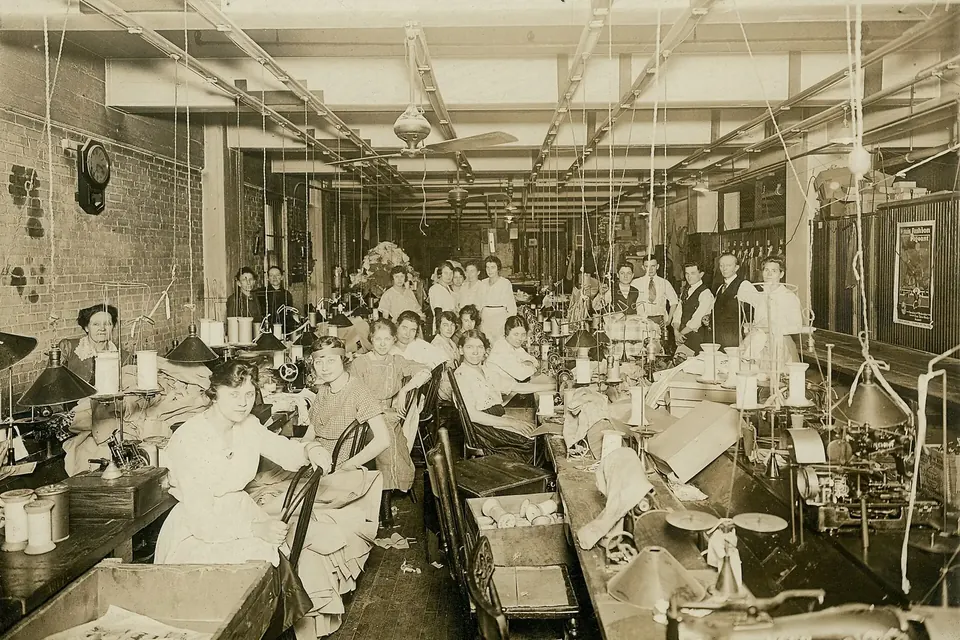
The struggle is not new. In 1911 a fire at the Triangle Shirtwaist Factory in New York killed 146 garment workers, most of them young immigrant women, many trapped behind locked doors. The disaster helped drive new fire-safety and labour laws in the state and strengthened garment unions. The pattern it revealed, of cheap production, weak inspection and workers unable to refuse unsafe work, would repeat itself in other places and other decades.
Rana Plaza and the Accord
On 24 April 2013 the Rana Plaza building in Savar, near Dhaka, collapsed. It housed several garment factories. The Clean Clothes Campaign counts 1,138 people killed and nearly 2,600 injured; the ILO describes more than 1,100 deaths. Workers had seen cracks in the building the day before.
The collapse led, within weeks, to the Accord on Fire and Building Safety in Bangladesh, a legally binding agreement between global brands and retailers and trade unions. Its key features were unusual at the time:
- Independent safety inspections of factories, with public reports.
- Remediation plans with deadlines, financed with the involvement of brands.
- Workers' right to refuse unsafe work, and safety committees in factories.
- Enforceability: disputes could go to binding arbitration.
Its successor, the International Accord for Health and Safety in the Textile and Garment Industry, took effect on 1 September 2021, keeping the model and allowing it to extend to other countries; a programme for Pakistan was added at the end of 2022. Compensation for the Rana Plaza victims was organised separately through a coordination committee, with the ILO as a neutral chair.
Wage theft at home: California's SB 62
Exploitation in garment making is not only an overseas problem. Los Angeles has long had a large garment industry, with widespread reports of pay far below the minimum wage. California's Garment Worker Protection Act (SB 62), signed on 27 September 2021 and in force since 1 January 2022, changed the rules:
| Provision | What it does |
|---|---|
| Ban on piece rates | Garment workers must be paid an hourly rate of at least the minimum wage, rather than per piece sewn (with an exception for certain collective agreements) |
| Damages | Employers paying by the piece owe $200 per employee per pay period, paid to the worker |
| Brand liability | "Brand guarantors" that contract for garment manufacturing are jointly and severally liable with manufacturers and contractors for unpaid wages |
| Records and registration | Manufacturers, contractors and brand guarantors must keep records; garment manufacturers must register with the Labor Commissioner |
The principle of brand liability matters well beyond California: it means the companies at the top of the supply chain cannot simply say they did not know.
Due diligence laws
A wider set of laws now asks large companies to identify and address human-rights risks in their supply chains. France adopted a corporate duty-of-vigilance law in 2017. At EU level, a Corporate Sustainability Due Diligence Directive was adopted in 2024; its scope and timetable have since been the subject of simplification proposals, so check the current text before relying on any date. These laws are only as strong as their enforcement, but they shift responsibility towards those with the most power to change conditions.
What can be done
By shoppers
- Buy fewer, better garments, and keep them longer. Constant demand for cheap, fast production is what squeezes factory margins and wages.
- Ask brands who made your clothes: do they publish a list of their factories, and say anything concrete about wages and union rights?
- Support organisations that work with garment workers, such as the Clean Clothes Campaign network, and campaigns for living wages.
- Remember that boycotting a producing country does not help its workers; pressure on brands and support for workers' own organisations does.
By brands
- Sign and implement enforceable agreements with unions, like the International Accord.
- Publish supplier lists and pay prices that make legal wages and safe buildings possible.
- Respect freedom of association, and provide grievance mechanisms workers trust.
By governments
- Enforce minimum wages and building safety, and fund labour inspectors.
- Make brands jointly liable for wage theft in their supply chains.
- Ratify and apply ILO conventions on freedom of association and occupational safety.
What we wear is personal. How it was made is political, and changeable.
Sources
- International Labour Organization (2021), Moving the Needle: Gender equality and decent work in Asia's garment sector.
- Clean Clothes Campaign, Rana Plaza.
- ILO, Rana Plaza collapse: ten years on (2023).
- International Accord, International Accord for Health and Safety in the Textile and Garment Industry.
- California Department of Industrial Relations, Garment Worker Protection Act: frequently asked questions.
- Cornell University ILR School, Remembering the 1911 Triangle Factory Fire.
 People & power
Does ethical fashion have a white savior complex?
Who speaks, who decides and who benefits: an essay on power in ethical fashion.
 People & power
What is an ethical modeling agency?
Debt, late pay, harassment and digital replicas: models' rights and what good agencies do.
 People & power
The Women Series
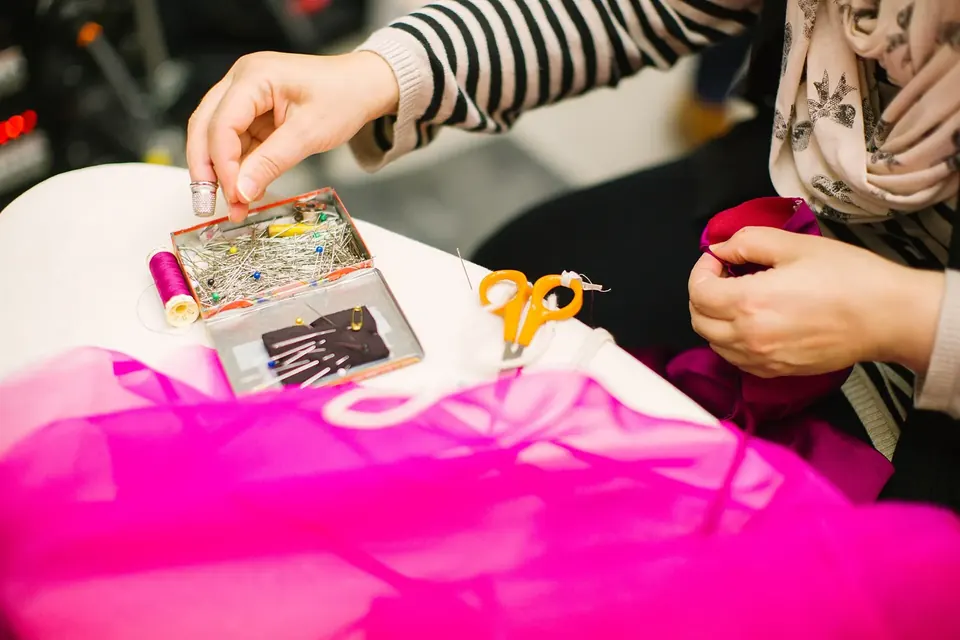
Tailor, mender, dyer, sorter, organiser: profiles of the work behind circular fashion.