Furnishing a rental the circular way: second-hand, repair and what to leave behind when you move
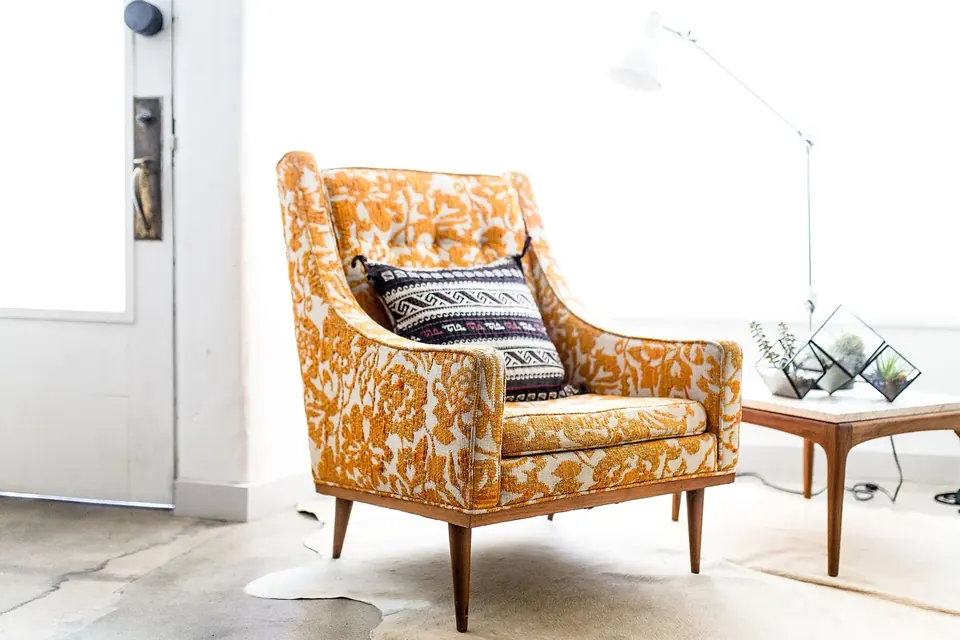
Renting tends to push people towards cheap, flat-packed furniture: you may move again in a year, so why invest? Yet a rented home is the ideal place for circular habits. Second-hand furniture is cheaper, often better built, and easier to sell on when you leave; household textiles can be bought, mended and passed on just like clothes. Here is how to furnish a rental well, keep your deposit, and leave without sending a vanload to landfill.
Why it matters
Furniture is one of the bulkiest parts of household waste. In the United States, the Environmental Protection Agency estimated that 12.1 million tons of furniture and furnishings were generated as municipal solid waste in 2018, about 4.1% of the total; only around 40,000 tons were recycled, while 9.7 million tons, roughly 80%, went to landfill. Carpets and rugs added a further 3.4 million tons, of which 9.2% were recycled.
Much of what is thrown away still works. A study by the UK charity WRAP, published in 2012 and based on 2010/11 data, estimated that householders disposed of about 670,000 tonnes of furniture a year, that furniture made up around 42% of all bulky waste, and that just under half of the furniture taken to household waste and recycling centres was reusable as it was or after slight repair.
Household textiles count too. The European Environment Agency reports that people in the EU consumed on average 19 kg of clothing, footwear and household textiles per person in 2022, up from 17 kg in 2019, and that textile consumption is among the household consumption categories with the highest pressures on the environment and climate.
Before choosing the flat itself, compare neighbourhoods and rents so that the move is one you can stay in for a while.
Start with what the flat already has
Many rentals come part-furnished. Before buying anything, make an inventory with the landlord or agent at check-in, with dated photographs of every room and each piece of furniture they provide, including existing marks and stains. Ask whether unwanted landlord furniture can be stored or removed rather than working around it, and agree in writing on anything you change. That record protects you at check-out and saves you from duplicating what is already there.
New, second-hand or rented: how they compare
Three routes are open to a tenant: buy new, buy second-hand, or pay for furniture by the month, either through a rental subscription or a rent-to-own plan. Each has a place, but they differ more in total cost and in what happens at the end than in the price tag on day one.
| New | Second-hand | Rented or rent-to-own | |
|---|---|---|---|
| Upfront cost | Highest, unless flat-pack | Usually lowest | Low: a first payment or deposit |
| Total cost | The purchase price | The purchase price, plus any repair | Grows with every month; on rent-to-own plans the FTC found people typically paid about twice the retail price |
| Build quality | Varies; cheap flat-pack often does not survive repeated moves | Older solid-wood pieces are often sturdier; check frames and joints | Depends on the provider; read what happens if a piece is damaged |
| Fire and safety labels | Required on new upholstered furniture in the UK and California | Check the label; dealers and furnished-let landlords must comply in the UK | The provider is supplying in the course of business, so the rules apply to them |
| Bed bugs and hygiene | Low risk | Inspect seams, joints and mattresses before bringing anything home | Ask how returned items are cleaned and inspected |
| When you move | Yours to move, sell or give | Yours, and easy to sell on | Returned, or you keep paying until the plan ends |
| End of life | In the US, about 80% of discarded furniture went to landfill in 2018 | Extends the life of a piece that already exists | Depends on whether the provider refurbishes and re-rents |
Renting can make sense for a short, fixed stay, or for a single expensive item you need at once. Before signing, the FTC advises asking exactly what you are committing to: the monthly payment, how long it takes to pay in full, and any other fees, such as for paying off early. For most rentals of a year or more, a mix of what the flat provides and well-chosen second-hand pieces is cheaper and leaves less behind.
Buying second-hand: what to check
Frames and joints
- Solid wood or plywood frames outlast particle board, which swells with damp and does not survive repeated assembly. Look underneath and at the back.
- Joints: dovetails, dowels, mortise-and-tenon and corner blocks are signs of good construction. Rock the piece gently; a little play in a chair can be reglued, but cracked rails are a bigger job.
- Drawers should run smoothly, with bottoms that are not sagging.
- Woodworm: small round exit holes with fresh, pale dust beneath them suggest active infestation. Old holes without dust are usually historic.
Upholstery
- Sit on it. Springs should support evenly without twanging or poking through; foam should recover its shape.
- Look at seams, piping and arm fronts, which wear first, and smell the cushions: smoke and damp are hard to remove from foam.
- Removable, washable covers are a big advantage for a long life.
Fire-safety labels
Upholstered furniture is regulated for fire safety, and the rules differ by country. In the UK, the Furniture and Furnishings (Fire) (Safety) Regulations 1988 apply to people who supply furniture in the course of business, including second-hand dealers and landlords of furnished lets, and new upholstered furniture must carry a permanent label; a missing label is a reason to ask questions, although it may simply have been removed. In California, upholstered furniture must meet the TB 117-2013 standard and, under a 2014 law, its label states whether it contains added flame-retardant chemicals. When buying from a private seller, check for these labels and ask about the piece's history.
Bed bugs
The US EPA advises checking second-hand furniture, beds and couches for signs of bed bugs before bringing them home. Signs include rusty or reddish stains, small dark spots of droppings, and tiny pale yellow eggs, eggshells or shed skins, in mattress and box-spring seams, bed-frame cracks, chair and couch seams and drawer joints. Use a torch and look closely; bed bugs are flat enough to hide in a crack the width of a credit card. Be particularly careful with upholstered pieces and mattresses left on the street.
Repairing and reupholstering
Many faults that put people off second-hand furniture are simple to fix:
| Fault | Fix | Who |
|---|---|---|
| Wobbly chair or table | Clean out and reglue joints; tighten or add corner blocks | You, with wood glue and clamps |
| Sticking drawers | Rub runners with candle wax or soap; replace worn runners | You |
| Scratched or faded finish | Clean, then oil or wax; refinish only if needed | You or a furniture restorer |
| Saggy seat | Replace webbing or foam | You (drop-in seats) or an upholsterer |
| Worn or stained fabric | Loose cover, throw, or full reupholstery | Upholsterer, or a sewing project |
| Broken frame | Professional repair | Furniture restorer |
Reupholstery costs real money, because it is skilled hand work, but on a good frame it is often worth it. A loose cover sewn from sturdy second-hand fabric, or a simple throw, is the rental-friendly alternative. Our guide to upcycling covers the same principles for textiles.
Curtains, linens and rugs
- Curtains: charity shops often carry lined curtains in good condition. Measure the window and rail first; hems can be taken up or let down, and two narrow pairs can be joined. Thermal linings help in draughty rentals.
- Bed linen and towels: second-hand linen is widely available; wash hot where the fabric allows. Mend small tears early, and turn worn sheets into pillowcases or cleaning cloths.
- Rugs: a washable rug protects floors and is easy to take with you. Check the back for moth damage and for colour that runs when dampened.
- Cushions and throws: the cheapest way to make a rented room your own, and easy to move.
For washing and stains, see the stain removal guide and our care habits, which apply to household textiles too.
Keeping your deposit intact
- Put felt pads under every chair and table leg, and use rugs in high-traffic areas and under desk chairs.
- Use free-standing shelves, clothes rails and leaning mirrors instead of drilling; ask permission in writing before fixing anything to a wall.
- Anchor tall furniture safely: if a bookcase must be fixed to the wall to stop it tipping, agree this with the landlord first.
- Keep landlord-provided furniture as you found it, and store anything you have asked to replace carefully.
- Ventilate to prevent condensation and mould behind furniture placed against external walls; leave a small gap.
- Repeat your check-in photos at check-out, in the same order.
Moving out: give, sell or recycle
- Sell good pieces early, with clear photos and measurements; furniture sells more slowly than clothes.
- Offer pieces to the next tenant or the landlord; a good desk or curtains may be welcome.
- Give through local reuse groups, furniture charities and reuse shops. Many collect bulky items, but they usually need fire labels on upholstery and items in usable condition.
- Repair before giving: a reglued chair is far more likely to find a home.
- Recycle textiles that cannot be reused at textile collection points; in the EU, separate collection of textiles has been required since 1 January 2025.
- Use bulky-waste collection last, and ask your council whether it has a reuse scheme.
Finally, if you are buying for the next home, shop with the same discipline as for clothes: measure the new space, buy what you will keep, and choose pieces that can be repaired. The city guide lists where to find repairers and second-hand shops.
The best rental furniture is the piece you can carry into the next home, and the one after that.
Sources
- US EPA, Durable goods: product-specific data (furniture and furnishings, carpets and rugs, 2018).
- WRAP (2012), Study into the re-use potential of household bulky items.
- European Environment Agency, Textiles.
- US Federal Trade Commission, How much for that sofa? Read the fine print (consumer alert, 20 April 2020).
- UK legislation, The Furniture and Furnishings (Fire) (Safety) Regulations 1988.
- European Commission, Revised Waste Framework Directive enters into force (news, 16 October 2025).
- US EPA, Protecting your home from bed bugs, and How to find bed bugs (epa.gov/bedbugs).
- California Bureau of Household Goods and Services, Industry advisory on SB 1019 flame-retardant labelling.
 Wardrobe
Sustainable in the city
Markets, swaps, repair cafés, tailors and cobblers: the city as a circular wardrobe.
 Care & repair
What is upcycled fashion?
Upcycling versus recycling, deadstock and offcuts, techniques, and projects to try.
 Wardrobe
Your messy closet is costing you money
Duplicates, damage and forgotten pieces: how to edit and organise a closet you wear.