Your messy closet is costing you money: how to organise a wardrobe you actually use
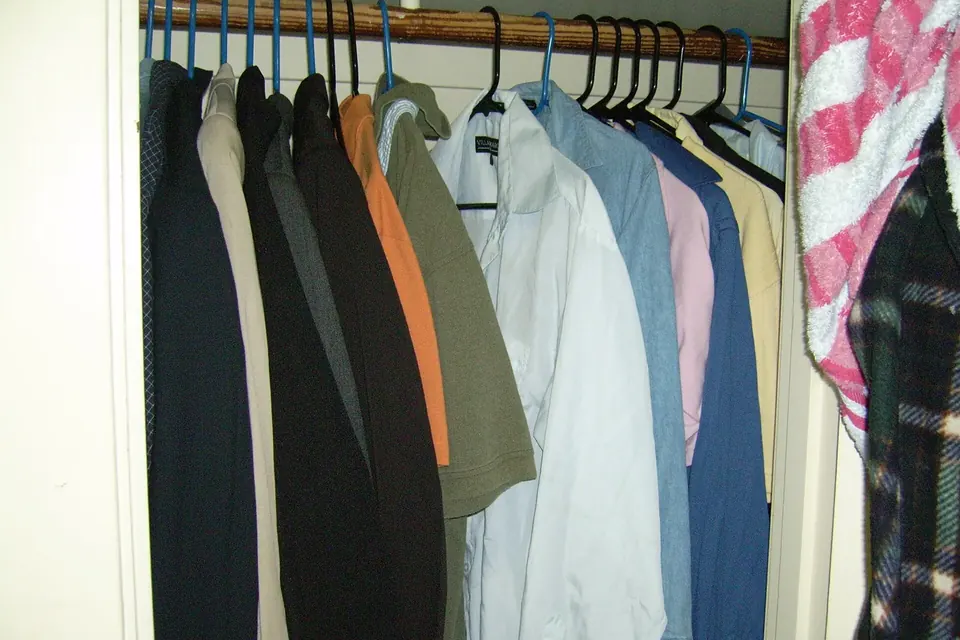
A crowded, disorganised closet looks like a storage problem, but it is usually a money problem. Clothes you cannot see do not get worn, clothes you forget you own get bought again, and clothes crushed on the floor or the wrong hanger wear out early. Organising a wardrobe is one of the cheapest ways to need fewer new clothes.
Where the money goes
- Unworn clothes. WRAP's 2012 study of UK households found that around 30% of clothing in the average wardrobe had not been worn for at least a year, most commonly because it no longer fitted. That is money sitting idle.
- Duplicates. Without a clear view of what you own, it is easy to buy a third grey sweater or a fourth pair of black trousers.
- Damage. Knitwear stretched on hangers, silk crushed in a pile, moths in a forgotten wool coat, shoes deformed at the bottom of a heap.
- Lost resale value. A barely worn garment can be sold or swapped while it is current and in good condition. Left for years, it loses most of that value.
At a global level, the Ellen MacArthur Foundation estimated that people miss out on USD 460 billion of value every year by throwing away clothes they could still wear.
Step 1: empty and edit
Work one category at a time, so the job is finished in an afternoon rather than abandoned halfway.
- Take everything in the category out and put it on the bed.
- Try on anything you are unsure about. Fit changes; memory flatters.
- Sort into keep, repair or alter, sell or swap, donate, and textile recycling for items that are worn out.
- Be honest about "one day" pieces: the dress for an event that has not happened in five years, the trousers for when you are a different size. Keep a small, defined number if they matter to you, and let the rest go.
- Deal with the repair pile within a fortnight, or it will move back into the closet unchanged.
Step 2: organise for visibility
| Item | Best storage | Why |
|---|---|---|
| Knitwear | Folded on shelves or in drawers, filed upright | Hanging stretches shoulders; filing lets you see every piece |
| Shirts, blouses, dresses | Hung, buttoned at the top, by colour | Fewer creases; quick to scan |
| Tailoring and coats | Wide, shaped hangers with space between | Keeps shoulders and lapels in shape |
| Trousers | Hung by the hem or folded over a bar | Keeps creases where they should be |
| T-shirts and casual tops | Folded and filed upright in drawers | Nothing gets lost at the bottom of a stack |
| Shoes | Racks or open boxes, with shoe trees for leather | Prevents crushing; lets leather dry |
| Out-of-season wool and silk | Clean, in breathable cotton bags or boxes | Moths are attracted to soiled fibres; plastic traps moisture |
Use one type of slim hanger throughout; it saves space and makes the rail look calm. Leave a little room between hangers so clothes can breathe and you can see them.
Step 3: make what you own easy to wear
- Keep the clothes you wear most at eye level and within reach, and the occasional pieces higher up.
- Turn every hanger backwards at the start of a season; turn it round when you wear the garment. After six months the backward hangers show you what you never wear.
- Photograph outfits you like, so you can repeat them on busy mornings.
- Keep a short list on your phone of what you own in each category. It stops duplicate purchases in a shop.
- Have a basket for clothes that need attention: a button, a hem, a stain. Empty it once a week.
Small spaces
A tiny wardrobe forces the discipline that a large one avoids, but it needs some tactics:
- Rotate by season. Store out-of-season clothes, clean, in boxes under the bed or on a high shelf, and keep only the current season in the wardrobe.
- Use the door and the walls. Hooks for bags and tomorrow's outfit, an over-door rack for scarves and belts.
- Fold upright. Filing T-shirts and knitwear vertically in drawers fits more and shows everything at once.
- Set a hanger limit. If the rail holds forty hangers, the wardrobe holds forty hanging garments; a new one means one goes.
Moths and other enemies
Clothes moths feed on wool, cashmere, silk, fur and feathers, particularly when the fibres carry traces of sweat or food. Crowded, undisturbed closets suit them. Signs include small irregular holes, silky tubes or webbing, and tiny pale larvae in folds and seams. To prevent damage, clean garments before storing them, vacuum the corners and floor of the wardrobe regularly, take clothes out and shake them in daylight from time to time, and store vulnerable pieces in sealed cotton or paper bags. An infested garment can be frozen in a sealed bag for several days, then cleaned, before it goes back.
Step 4: keep it that way
- One in, one out. When something new arrives, something leaves.
- A seasonal review. When you swap summer and winter clothes, edit again, wash or air what you store, and check for moths.
- Shop with your list. The guide to shopping less explains how to identify real gaps.
- Look after what you keep. See our twelve habits that make clothes last.
What to do with what leaves
Give clothes the best chance of being worn again:
- Sell or consign good-quality and branded pieces, with clear photos and measurements.
- Swap with friends or at local swap events, especially children's clothes and occasion wear.
- Donate clean, wearable items to organisations that can use them, after checking what they accept.
- Recycle worn-out textiles at collection points rather than putting them in general waste. In the US, the EPA estimated that 11.3 million tons of textiles went to landfill in 2018.
Moving house is the best moment for a full edit, of clothes and of everything else. Our guide to furnishing a rental the circular way covers what to give, sell or recycle when you move out.
An organised closet is not a showroom. It is a place where every garment gets its turn.
Sources
- WRAP (2012), Valuing our clothes.
- Ellen MacArthur Foundation (2017), A New Textiles Economy, summary of findings.
- US EPA, Textiles: material-specific data.
 Wardrobe
How to shop less
Audit, find the real gaps, slow the impulse, and buy fewer, better pieces.
 Wardrobe
Better fashion habits
Wash cooler, dry flat, store well, mend early: twelve routines that add years.
 Wardrobe
Sustainable shopping for maximalists
Colour, pattern and drama, sourced second-hand, rented, swapped and styled to last.