How does the fashion industry waste water? From cotton fields to dye houses to your washing machine
Fashion uses water in two ways: it consumes it, mostly to grow fibre, and it pollutes it, mostly when fabric is dyed and finished and, later, when synthetic clothes are washed. Both matter, and they happen in different places, which is why "how much water is in my T-shirt?" has no single honest answer.
The big picture
The Ellen MacArthur Foundation's 2017 analysis estimated that textile production, including cotton farming, uses around 93 billion cubic metres of water a year, contributing to problems in some water-scarce regions. UNCTAD's figure, reported by UN News in 2019, is of the same order: about 93 billion cubic metres, enough to meet the needs of five million people. More recent UN communication, on the International Day of Zero Waste in 2025, gave a larger estimate of 215 trillion litres a year. The spread reflects different scopes and methods; what all the estimates agree on is the scale, and where it is concentrated.
Pollution is the other half. The same Ellen MacArthur Foundation report cites an estimate that 20% of industrial water pollution globally is attributable to the dyeing and treatment of textiles.
Stage 1: growing fibre
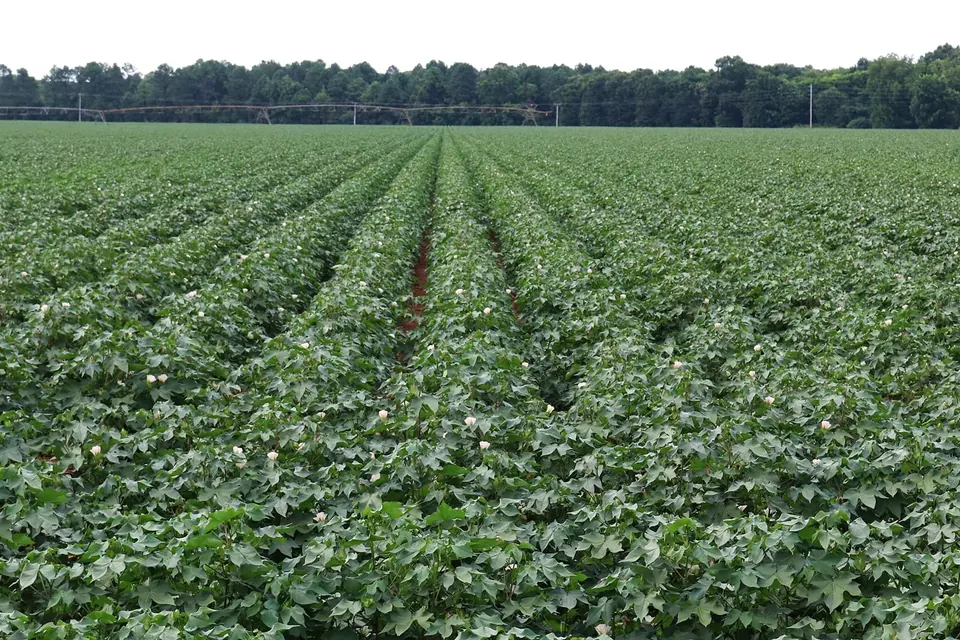
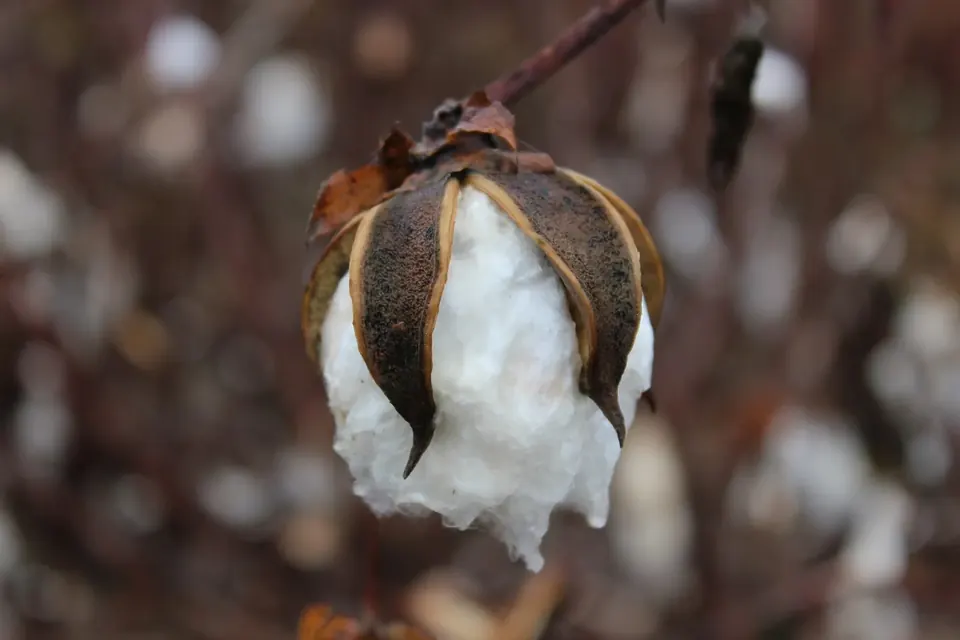
Natural fibres are crops. Cotton, the most widely used of them, needs a lot of water, and where it is grown with irrigation in dry regions it competes directly with drinking water, food crops and ecosystems. Water specialists distinguish between:
- Green water: rainfall stored in the soil and used by the plant.
- Blue water: water taken from rivers, lakes and aquifers for irrigation, the part that most affects local scarcity.
- Grey water: the volume of fresh water needed to dilute pollution, from fertilisers and pesticides for example, to acceptable levels.
Rain-fed cotton and irrigated cotton from an arid basin can therefore have very different impacts even if the total litres look similar. Linen and hemp are generally less thirsty crops; wood-based fibres such as lyocell depend on how the forest and the factory are managed; synthetic fibres use little water to make but are made from fossil fuels.
Stage 2: wet processing
Between fibre and finished fabric come the "wet" processes: scouring and bleaching, dyeing, printing and finishing treatments such as softening, water repellency or crease resistance. They use water and heat, and they use chemicals. Where effluent treatment is weak or not enforced, wastewater carrying dyes, salts and other substances can be discharged into rivers. This is why concentrated production regions have seen rivers visibly coloured by dye-house effluent.
What makes a difference here:
- Effective wastewater treatment on site or in industrial parks, and enforcement of discharge limits.
- Restricted-substance and manufacturing-restricted-substance lists, which keep the most hazardous chemicals out of the process.
- Dyeing methods that use less water and energy, and colours that do not need repeated processes.
- Transparency: brands that publish their dyeing and finishing suppliers can be held to account.
Stage 3: your washing machine
When synthetic textiles such as polyester, nylon and acrylic are washed, they shed tiny plastic fibres. The Ellen MacArthur Foundation estimated that around half a million tonnes of plastic microfibres end up in the ocean every year, sixteen times more than plastic microbeads from cosmetics. Waste-water treatment plants catch part of them, but some escape, and fibres retained in sewage sludge can return to land.
Washing also uses water and energy directly. Most of the energy goes into heating: the US ENERGY STAR programme estimates water heating at about 90% of a washer's operating energy.
What you can do
| Where | Action | Why it helps |
|---|---|---|
| Buying | Buy fewer new garments; choose second-hand first | Avoids the fibre-growing and dyeing footprint entirely |
| Buying | Prefer certified organic or rain-fed fibres, and brands that disclose their wet-processing suppliers | Reduces pesticide and fertiliser pollution; makes dye houses accountable |
| Washing | Wash less often, full loads, cool temperatures, short cycles | Saves water and energy; less shedding with less friction and heat |
| Washing | Use a microfibre-catching wash bag or an external filter for synthetics | Retains part of the fibres before they reach drains |
| Drying | Air-dry | No dryer energy; less fibre wear |
| End of life | Resell, donate or recycle; never bin | Every reused garment replaces a new one |
What the industry and regulators can do
Individual choices are only part of the answer; most of the water impact sits in supply chains that shoppers cannot see. The European Commission's textiles strategy, adopted in March 2022, notes that textile consumption in the EU ranks third among consumption categories for impact on water and land use. Its measures include ecodesign requirements for durability and recyclability, mandatory extended producer responsibility for textiles, and tighter rules on environmental claims. Elsewhere, enforcement of effluent standards in producing countries and supplier disclosure by brands are the levers that count.
The water in your clothes was mostly spent long before they reached you, which is why buying fewer of them matters most.
Sources
- Ellen MacArthur Foundation (2017), A New Textiles Economy, summary of findings.
- UN News (March 2019), UN launches drive to highlight environmental cost of staying fashionable (UNCTAD water figure).
- UN News (27 March 2025), Fast fashion fuelling global waste crisis, UN chief warns.
- European Commission, EU Strategy for Sustainable and Circular Textiles.
- ENERGY STAR, Clothes washers.
- Niinimäki, K. et al. (2020), The environmental price of fast fashion, Nature Reviews Earth & Environment 1, 189–200.
 Materials & footprint
What is sustainable fashion?
The problems it tries to fix, the circular idea behind it, and where your own wardrobe fits in.
 Materials & footprint
The swimwear revolution
From ghost nets to recycled nylon: what has changed, and what still has to.
 Wardrobe
Better fashion habits
Wash cooler, dry flat, store well, mend early: twelve routines that add years.