A guide to better fashion habits: twelve routines that make clothes last
The way you treat clothes after you buy them decides how long they last. Most damage is not dramatic: it is too much heat, too much agitation, too much washing and a small fault left until it becomes a big one. Here are twelve habits, grouped by moment, that add years to a wardrobe at almost no cost.
When you wash
1. Wash less often
Many garments are washed out of habit rather than need. Jeans, knitwear, jackets and trousers can usually be worn several times between washes; airing them overnight on a hanger, spot-cleaning small marks and brushing wool are often enough. Underwear, sportswear and anything worn against the skin in hot weather are the exceptions.
2. Wash cooler
Heat is hard on fibres, dyes and elastane, and it is where most of a washing machine's energy goes. The US ENERGY STAR programme states that water heating accounts for about 90% of the energy it takes to run a clothes washer, that switching from hot to warm can halve that energy, and that cold cycles reduce it further. It adds that, except for oily stains, washing in cold water generally does a good job of cleaning.
3. Fill the machine, but do not cram it
Full loads use water and energy efficiently; overloading stops clothes moving freely, so they clean less well and rub against each other more.
4. Turn clothes inside out and close them up
Turning prints, dark colours and knits inside out reduces fading and pilling. Close zips and hooks, which otherwise snag other garments, and empty pockets. Use a mesh bag for delicates and anything with straps.
5. Use less detergent
Follow the dose for your water hardness and load size rather than filling the drawer. Excess detergent can leave residue that stiffens fabric and attracts dirt.
When you dry and store
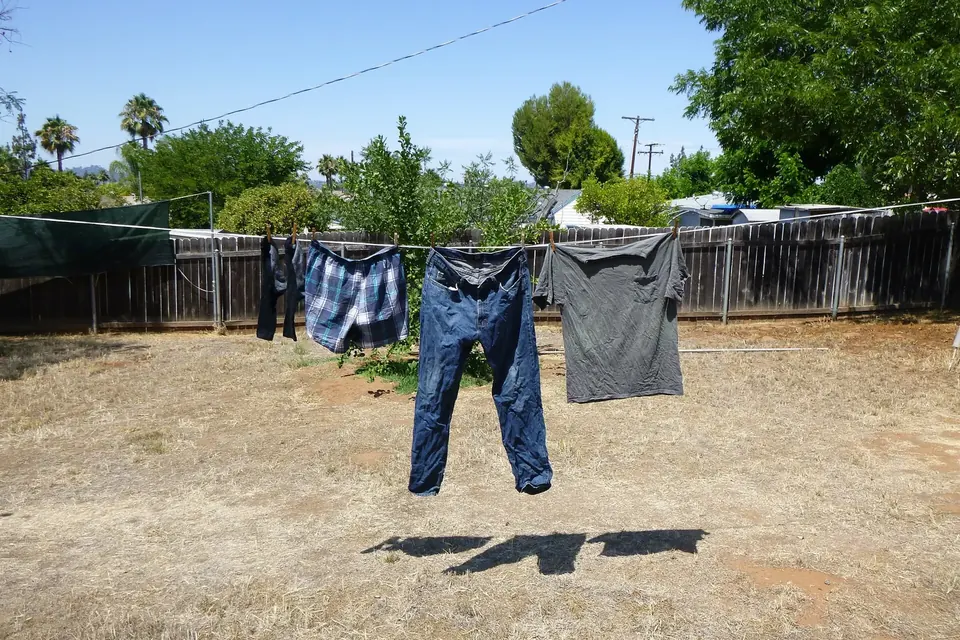
6. Air-dry whenever you can
Tumble dryers shrink cotton and wool, weaken elastic and wear fibres: the lint in the filter is your clothes. Hang shirts and dresses on hangers to dry with fewer creases; dry knitwear flat on a towel so it keeps its shape.
7. Store by fibre
- Knitwear: fold, never hang, or the shoulders stretch.
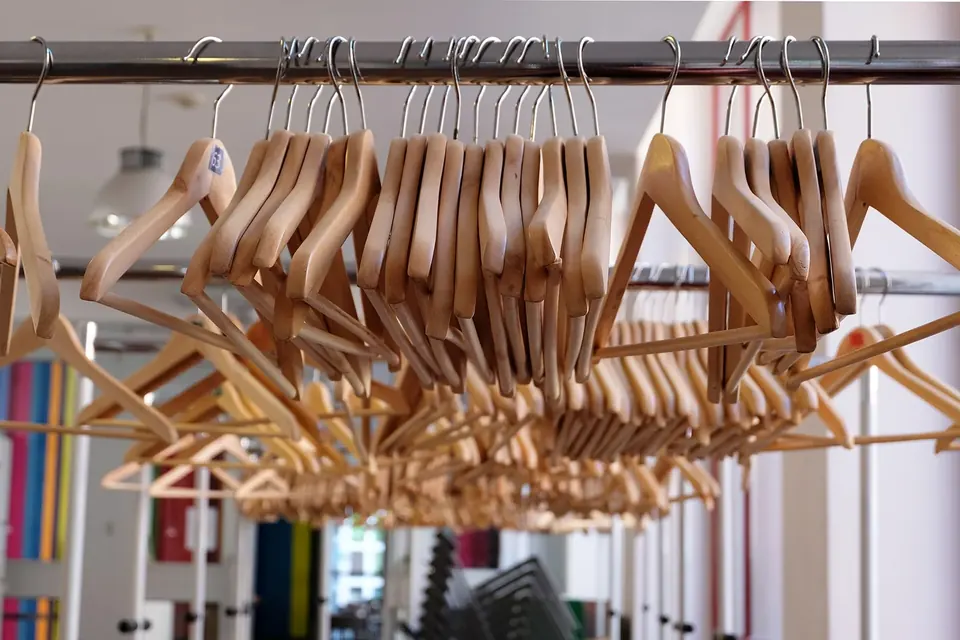
- Tailoring and coats: use wide, shaped hangers.
- Wool and silk out of season: clean before storing (moths are drawn to soiled fibres) and keep in breathable cotton bags, not plastic.
- Leather: keep away from radiators and direct sun, and let it breathe.
8. Give shoes a rest
Leather shoes last longer when they dry out fully between wears. Rotate two pairs, use shoe trees, and have heels and soles replaced before the wear reaches the upper.
When something goes wrong
9. Read the care label, then think
Care labels use internationally standardised symbols for washing, bleaching, drying, ironing and professional cleaning. They are a manufacturer's safe minimum, not a law of physics: some "dry clean only" garments can be hand-washed with care, and our guide to alternatives to dry cleaning explains which. But "do not tumble dry" usually means exactly that.
10. Treat stains straight away
Blot, do not rub; use cold water first for protein stains such as blood or milk; and never put a stained garment in the dryer, because heat sets most stains. The stain removal guide covers each family of stain.
11. Mend early
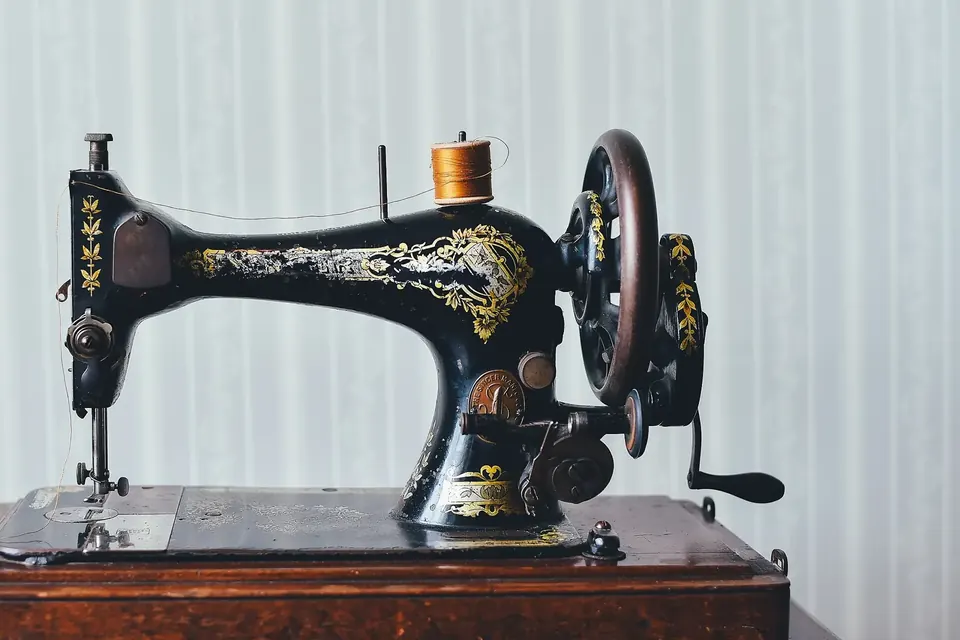
A loose button, a seam opening by a centimetre or a small hole in a sweater takes minutes to fix and hours once it has grown. A basic kit is enough for most repairs:
- Hand-sewing needles in two or three sizes, and a darning needle for knits
- Thread in black, white, navy, grey and beige
- Small sharp scissors, pins and a thimble
- A seam ripper
- Spare buttons (keep the ones that come with new clothes in one jar)
- A fabric pen or chalk, and an iron-on patch or two
Visible mending, where the repair is made a feature with contrasting thread or patches, has made darning fashionable again. For anything structural, such as replacing a zip or relining a coat, a tailor or alterations shop is usually worth the cost.
Over the long term
12. Rotate, review and pass on
Wearing the same few pieces every week wears them out quickly while the rest sit idle. Rotate what you wear, review your wardrobe each season, and move on what you genuinely no longer wear while it is still in good condition. In order of preference:
- Give or sell it to someone who will wear it: friends, swaps, resale platforms, consignment shops.
- Donate wearable items to organisations that can use or resell them; ask what they accept.
- Use textile collection points for worn-out items. In the European Union, member states have been required to collect textiles separately since 1 January 2025, and new rules adopted in 2025 will make producers pay for collection and sorting through extended producer responsibility schemes.
Do not put clothes in general waste if you can avoid it. In the United States, the Environmental Protection Agency estimated that of 17 million tons of textiles in municipal waste in 2018, 11.3 million tons went to landfill and only 14.7% were recycled.
Household textiles follow the same routines: bed linen, towels, curtains and rugs can be mended and passed on like clothes, as described in our guide to furnishing a rental the circular way.
The best fashion habit is the boring one: wear it, air it, fix it, keep it.
Sources
- ENERGY STAR, Clothes washers (US Environmental Protection Agency and Department of Energy).
- US EPA, Textiles: material-specific data (2018 figures).
- European Commission, EU Strategy for Sustainable and Circular Textiles, and the revised Waste Framework Directive (in force 16 October 2025).
- New Mexico State University Cooperative Extension, Guide C-502: Removing Clothing Stains.
 Care & repair
The art of stain removal
Protein, tannin, grease, dye: identify the stain family, then treat it the right way.
 Care & repair
Break up with your dry cleaner
Why perc is being phased out, what wet cleaning is, and how to wash 'dry clean only' at home.
 Wardrobe
How to shop less
Audit, find the real gaps, slow the impulse, and buy fewer, better pieces.