Let's talk about sustainable swimwear: materials, fit and care that make a swimsuit last

Swimwear is a difficult garment to make sustainably. It has to stretch, recover, dry fast and survive salt water, chlorine and strong sun, which is why almost all of it is made from synthetic fibres. That does not make the choice meaningless: what a swimsuit is made of, how well it fits and how you look after it all change how long it lasts, and longevity is where most of the gain is.
What swimsuits are made of
| Fibre | Typical use | Strengths | Weaknesses |
|---|---|---|---|
| Polyamide (nylon) with elastane | Most fashion swimwear | Soft, very stretchy, good shape | Elastane degrades with chlorine, heat and sunscreen |
| Polyester with elastane | Sports and pool swimwear | More resistant to chlorine and fading | Less soft; still contains elastane |
| Polyester or PBT without elastane | Chlorine-resistant training suits | Lasts much longer in pools | Less stretch, firmer fit |
| Natural fibres (cotton, wool, some knits) | Rare, mostly vintage or crochet | Biodegradable | Sag and absorb water; dry slowly |
Elastane is the weak point in most swimsuits. It gives the stretch, but it is also what breaks down first, leaving a suit baggy, see-through or with a "crackled" surface.
Recycled fibres: what they change
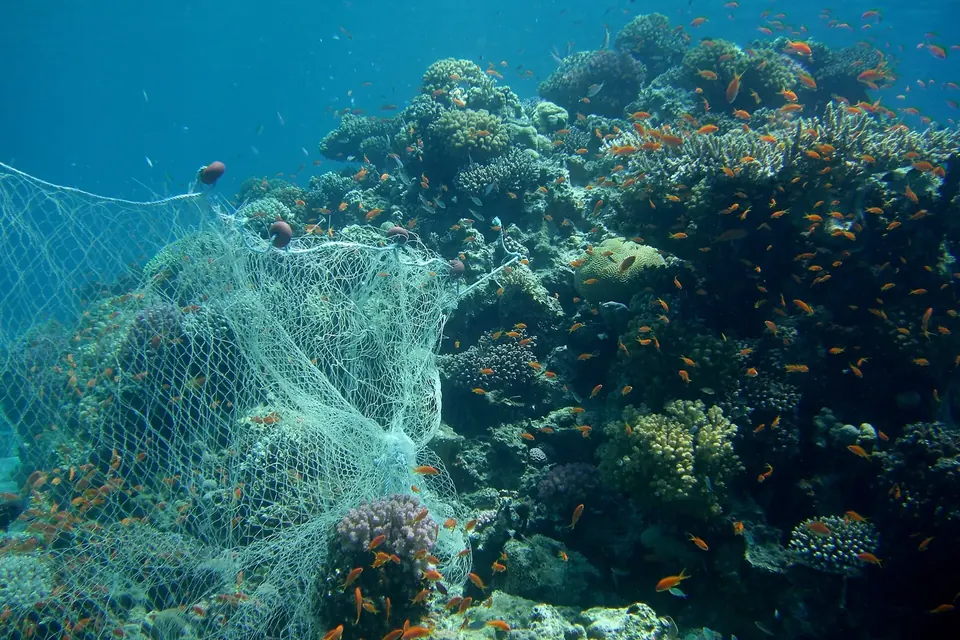
Many brands now use recycled nylon or recycled polyester. Recycled nylon can be made from pre-consumer factory waste and from post-consumer waste such as used fishing nets and carpet; recycled polyester is usually made from plastic bottles. Both reduce the need for virgin fossil-based fibre, and nylon recovered from fishing gear removes material that is a serious problem at sea, as our companion piece on the swimwear industry explains.
Recycled fibres do not make a swimsuit biodegradable, and they still shed microfibres in the wash. The blend with elastane also makes swimwear difficult to recycle again at the end of its life. So recycled content is a real improvement, but the most important number is still how many summers the suit lasts.
Look for the percentage of recycled content on the composition label, not just the word "recycled" in the product name, and for an independent recycled-content certification. Under EU rules that apply from 27 September 2026, generic environmental claims and uncertified sustainability labels are banned.
Choosing a suit that lasts
- Fit for movement, not the mirror. A suit that is too tight strains the elastane and wears out quickly; one that is too loose sags faster. Raise your arms, squat and twist in the fitting room.
- Look at the lining. A full lining adds opacity and durability. Thin, single-layer fabric thins further with wear.
- Check the stitching. Seams should stretch with the fabric without the thread snapping. Elastic at the leg openings and straps should be enclosed, not just edged.
- Prefer adjustable straps and replaceable parts. Hooks and sliders allow repair; moulded cups and plastic rings can be removed for washing or replaced.
- Choose versatile pieces. A plain one-piece in a colour you like can double as a body or top; mix-and-match separates let you replace only the part that wears.
- Match the suit to its use. If you swim laps in a chlorinated pool every week, a chlorine-resistant training suit will last much longer than a fashion suit.
Care: the routine that doubles a swimsuit's life
- Rinse in cool fresh water right after swimming, before chlorine, salt and sunscreen have time to work on the fibres.
- Hand-wash in cool water with a small amount of mild detergent. Avoid the washing machine and never use the dryer; heat is what destroys elastane.
- Do not wring. Press the water out in a towel.
- Dry flat in the shade. UV fades colour and degrades fibres; hanging by the straps stretches them.
- Do not sit on rough surfaces. Pool edges and rocks cause pilling and snags; sit on a towel.
- Apply sunscreen before you dress and let it absorb. Some ingredients stain fabric and weaken elastane.
- Rotate two suits if you swim often, so each can recover fully between uses.
How many swimsuits do you need?
Fewer than most people own. For an occasional beach holiday, one or two suits in good condition are plenty; for weekly pool swimming, two chlorine-resistant training suits worn in rotation will outlast several fashion suits. Before buying for a trip, check what you already have: a suit that has lost its shape at the leg elastic can often be repaired, and a top or bottom that still fits can be paired with a new single piece rather than a whole set.
Colour matters for longevity too. Very bright and very dark dyes tend to show fading from sun and chlorine first; mid-tones and prints hide wear better. And a classic cut, whether a simple one-piece, a high-waisted bottom or a sports top, will not look dated after a single season, which makes it more likely to be worn until it is genuinely worn out.
Second-hand, repair and end of life
Second-hand swimwear is more common than people think, especially barely worn suits. Wash any second-hand piece before wearing it. Small repairs are possible: restitching a seam with a stretch stitch, replacing a strap or a hook, or swapping removable cups. When a suit is finished, cut it up for cleaning cloths, or use a textile collection point; in the EU, member states have had to collect textiles separately since 1 January 2025.
The greenest swimsuit is the one you rinse, dry in the shade, and wear for years.
Sources
- Ellen MacArthur Foundation (2017), A New Textiles Economy, summary of findings (microfibres, plastic share of fibre production).
- Directive (EU) 2024/825 on empowering consumers for the green transition.
- European Commission, Revised Waste Framework Directive enters into force (16 October 2025).
- FAO (2009), Ghost nets hurting marine environment.
 Materials & footprint
The swimwear revolution
From ghost nets to recycled nylon: what has changed, and what still has to.
 Materials & footprint
How fashion wastes water
Thirsty crops, polluting dye houses, microfibres in the wash, and what actually helps.
 Wardrobe
Better fashion habits
Wash cooler, dry flat, store well, mend early: twelve routines that add years.