How to buy a winter coat that lasts: read the label, check the seams, test the fit
The first cold week of the year and the sales season tend to arrive together. That is exactly when a coat bought in a hurry turns into a coat that pills by February, loses a button by March and hangs unworn the next winter. A good coat is the one item in a wardrobe where buying once and buying well makes the biggest difference, because you wear it almost every day for months. Here is a checklist you can run through in a shop, or with a second-hand listing open on your phone, before you pay.
Start with what you actually need
Before fabric or price, decide what the coat is for. The assistant chair for textile science at the Fashion Institute of Design and Merchandising, interviewed by Reviewed, puts it simply: think about the typical winter where you live, your lifestyle and what you already wear. A tailored wool coat suits a city commute in cold, damp weather. A long walk to a train in sleet or a winter in a much colder climate calls for a padded or insulated coat with a weatherproof shell. Many people end up owning two mediocre coats because they bought one that did neither job properly.
It also helps to look at what is already hanging in the hall. If you have a coat that fits but looks tired, a good brushing and steaming, new buttons or a re-lining by a tailor may cost far less than a replacement. Our guide on how to shop less walks through that audit.
Read the fibre-content label first
The label sewn into the side seam is the most honest thing about a coat, because it is regulated. In the European Union, Regulation (EU) No 1007/2011 on textile fibre names says that a product must be labelled "with the name and percentage by weight of all constituent fibres in descending order". In the United States, the Wool Products Labeling Act sets similar rules for anything containing wool.
A few terms on that label are worth knowing:
- "Virgin wool" or "fleece wool": under the EU regulation, these names may only describe wool that has never been incorporated in a finished product, and in a blend the virgin wool must make up at least 25% of the weight.
- "Recycled wool": the US Act defines it as wool that has been made back into fibre after being woven or felted into a product, whether or not a consumer ever used it. Recycled wool is not a defect. It is often shorter and slightly less resilient than new fibre, so it is usually blended, and a recycled-wool coat can be a good choice if the cloth is dense.
- "Cashmere": US law sets a technical bar. Under 15 U.S. Code § 68b, a product labelled cashmere must be the fine undercoat of the cashmere goat with an average fibre diameter of no more than 19 microns. A "cashmere blend" coat at a low price may contain only a small share of it.
- Linings and padding: the EU rules require the fibre content of each component when it differs, but small components that are not main linings can be left out. Look for a separate line for the lining.
What the percentages tell you in practice: wool is warm when damp, recovers from creasing and resists odour, which is why a high wool content is worth paying for in a city coat. A small share of polyamide (nylon) can make a wool cloth more resistant to abrasion. A coat that is mostly polyester or acrylic with a little wool added for the label will usually look good in the shop and tired after a season, because those fibres pill readily when rubbed by bags and seatbelts. Synthetics are now the bulk of what the world spins: Textile Exchange's latest materials report counts a record 139 million tonnes of fibre produced in 2025, with virgin fossil-based fibres rising from 81 to 86 million tonnes in a year, as Just Style reported. You will see polyester on most coat labels. For what each fibre is and how it behaves, see our fibre guide.
Check the cloth with your hands
- Density: hold a single layer of the cloth up to the light. A tight, even weave that lets little light through will keep wind out and wear evenly. A loose, thin cloth will go shiny at the elbows and cuffs.
- Surface: rub a hidden spot, under the arm, between finger and thumb for a few seconds. If tiny bobbles start to form already, they will cover the coat by spring. Our guide on removing pilling explains why some fibres and yarns pill more than others.
- Recovery: squeeze a handful of cloth and let go. Good wool springs back; a creased, papery fabric will crease in wear too.
Turn it inside out: the construction checks
The Reviewed interview lists the details anyone can see without being an expert: check that the buttons lie flat, that the seams are straight and the hem is even, look for loose threads, and make sure the coat "has a good lining in it". To that list we would add a few points that make the difference between five winters and fifteen:
- Seam allowances: generous seam allowances, ideally finished or bound, mean a tailor can let the coat out or repair a split seam later.
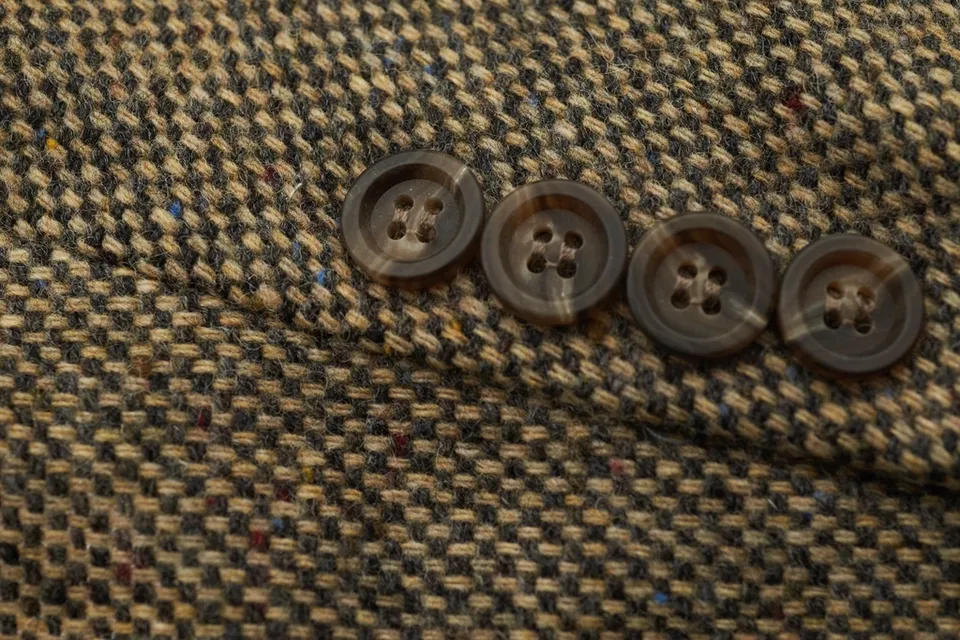
- Buttons: they should be sewn on with a thread shank (a short stem of wound thread) so they sit above thick cloth, and a spare button inside is a good sign.
- Stress points: pocket corners, the top of the back vent and the underarm should be reinforced, with no puckering.
- Lining: a smooth, firmly woven lining helps the coat slide over jumpers and protects the outer cloth from wear from inside. A pleat at the centre back of the lining gives room to move.
- Zips and fastenings on padded coats: a sturdy zip with a storm flap over it, and baffles (stitched compartments) small enough to keep the filling from slumping to the hem.
The two-minute fit test
Try the coat on over the thickest jumper you will wear under it. Fasten it fully, then sit down, reach forward as if for a steering wheel, and lift both arms. It should not pull across the shoulders or chest, the sleeves should still cover your wrist bones with arms outstretched, and the buttons should not strain. Most alterations are possible, but shortening sleeves on a coat with working buttonholes, or taking in the shoulders, is expensive. If the shoulders do not fit, keep looking.
Second-hand is often the better coat
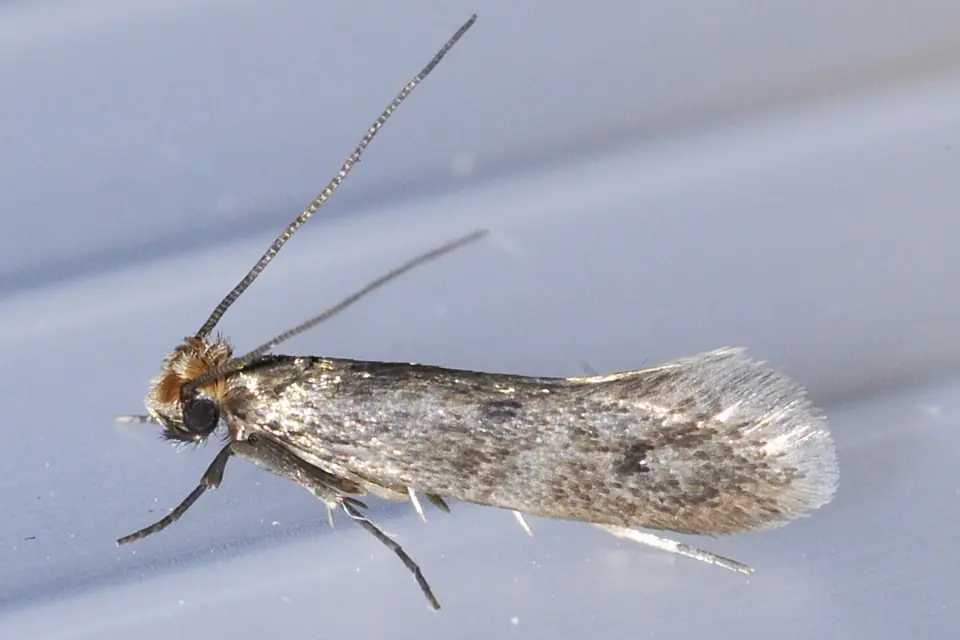
Wool coats are one of the best second-hand buys. They survive decades when cared for, and older coats were often made from heavier cloth than today's equivalent at the same price. Check the same points as above, plus three more: moth damage (small holes, often under the collar and in the folds; our guide to clothes moths explains what to look for), worn edges at the cuffs and pocket mouths, and the condition of the lining, which is easy to replace if the outer cloth is sound. Many charity shops and vintage dealers keep the original label, so you can read the fibre content just as you would on a new coat.
Keep it going
Brush the coat after wear, let it air before putting it away, hang it on a wide, shaped hanger and give it space in the wardrobe. Clean it only when it needs it, following the care label: in the US, the Federal Trade Commission's care labeling rule requires manufacturers to give at least one safe cleaning method, and our guide on reading care labels explains the symbols. Over the summer, store it clean, in a breathable cover, away from moths.
The label tells you what the coat is made of; the seams and the fit tell you how long it will last. Check both before the sales do the deciding for you.
Sources
- Regulation (EU) No 1007/2011 on textile fibre names and related labelling, EUR-Lex, Articles 8, 9 and 11 (consulted 23 November 2026).
- Wool Products Labeling Act of 1939, 15 U.S. Code § 68 (definitions, including "recycled wool") and § 68b (cashmere), Legal Information Institute.
- Federal Trade Commission, Care Labeling of Textile Wearing Apparel, 16 CFR Part 423, eCFR.
- Reviewed, "How to buy a winter coat that's high-quality and will last" (consulted 23 November 2026).
- Textile Exchange, Materials Market Report (2026), reported by Just Style, "Virgin fossil-based fibres drive record global production", 2 October 2026.
 Wardrobe
How to shop less
Audit, find the real gaps, slow the impulse, and buy fewer, better pieces.
 Care & repair
How to read a care label
Tubs, triangles, squares, irons and circles: what each symbol really asks, and what it leaves out.
 Care & repair
How to get rid of clothes moths
The moth you see is not the one eating your jumper. Where the larvae hide, what actually kills them, and how to store wool so they never get a second chance.