How to remove pilling from clothes: why bobbles form, how to take them off and how to stop them coming back
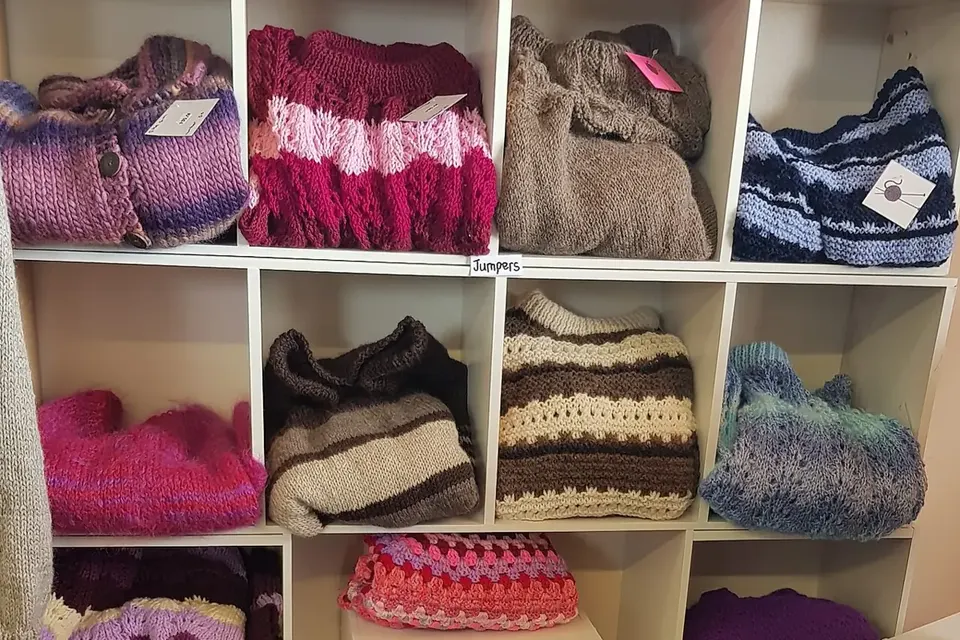
Every knit you own will pill sooner or later. Little balls of fibre show up under the arms, along the sides, on the cuffs and wherever a bag strap rubs, and a jumper that looked new last month suddenly looks tired. Many of these garments end up at the back of the wardrobe or in a donation bag, even though the knit underneath is usually fine. Pilling is a surface problem, and it can almost always be fixed. This guide explains why it happens, how to remove pills without damaging the fabric, and how to slow it down.
What a pill is
A pill, also called a bobble or a fuzzball, is a small tangle of fibres stuck to the surface of a fabric. It forms in three stages, which textile scientists have studied in detail for decades (see the review cited at the end of this guide).
- Fuzzing. Friction from wearing and washing pulls loose fibre ends out of the yarn, so a soft haze appears on the surface.
- Entangling. More rubbing rolls those loose ends together into tiny balls.
- Anchoring or wearing off. The balls stay tied to the fabric by a few fibres that are still caught in the yarn. If those fibres are weak, they break and the pill drops off. If they are strong, the pill stays and keeps collecting more fibre.
This explains why pills always show up in the same places. They gather where the fabric rubs against itself or against something else: the inner arms against the body, the sides against a desk, the front against a seat belt, the shoulder under a bag.
Why some clothes pill more than others
Pilling depends less on price than on fibre and construction.
- Short fibres pill more. A yarn spun from short fibres has many more loose ends than one spun from long fibres. Lambswool, cheaper cashmere and short-staple cotton tend to pill more than long-staple cotton, linen or tightly spun worsted wool.
- Loose yarns and loose knits pill more. Soft, lightly twisted yarns and open knits let fibres slip out easily. Tightly twisted yarns, dense knits and woven fabrics hold them in.
- Synthetics keep their pills. Wool and cotton pill too, but their fibres are relatively weak, so pills tend to break off over time. Polyester, nylon and acrylic fibres are strong, so the pills stay anchored and pile up. Blends of a natural fibre with a strong synthetic often show the most visible pilling, because the synthetic holds on to bobbles made from both fibres.
- Silk and linen pill least among common fibres.
Manufacturers test for this. The international standard ISO 12945, Textiles: determination of fabric propensity to surface pilling, fuzzing or matting, rubs fabric samples under controlled conditions. Experts then grade the surface against reference photos on a five-point scale, from 5 (no change) to 1 (very severe pilling). Brands and retailers use such tests to set their own quality thresholds, but you will rarely see the grade on a label.
What you can see on the label is the fibre content. In the European Union, textile products must state their fibre composition under the Textile Labelling Regulation, and many other countries have similar rules. The fibre content is the best clue you have in a shop about how a knit will age. Our guide to reading a care label covers the washing symbols printed next to it.
How to remove pills
Whatever tool you use, the principle is the same: cut or lift off the ball and leave the knit alone. Pulling pills off by hand stretches the anchoring fibres and pulls more fibre out of the yarn, which helps new pills form. Avoid it.
Before you start
- Work on a clean, dry garment, laid flat on a table or an ironing board, with no folds under the area you are working on.
- Test any tool on a hidden area first, such as the inside of the hem.
- Work in good light, at an angle, so the pills cast small shadows.
Fabric shaver (battery or electric)
A fabric shaver, or de-piller, has a fine metal guard over a set of spinning blades. Rest it flat on the fabric, without pressing, and move it in small circles. The guard lets the pills through and keeps the knit out. This is the fastest method for large areas and for synthetic or blended knits with stubborn pills. Empty the lint compartment often. Be careful on very fine or loosely knitted pieces: if the knit lifts into the guard, stop and switch to a gentler method.
Sweater comb or knit brush
A sweater comb is a small comb with very fine, short teeth. A knit brush has stiff natural bristles. Both lift pills off with short, light strokes in one direction. They are slower than a shaver but more controlled, and good for wool and cashmere, where the pills are softer.
Sweater stone or pumice
A sweater stone is a block of pumice that grips pills as you stroke it gently across the surface. It works well on thick, sturdy knits. Avoid it on fine gauges, where it can scuff the yarn.
Small scissors or a disposable razor
For a few large pills, small, sharp curved scissors are the safest tool: lift each pill gently and snip under it. Some people also use a disposable razor on thick knits, stroking very lightly downwards with the fabric held flat. It works, but a slip can cut the yarn, so keep it for sturdy, inexpensive pieces.
When you have finished, shake the garment, run a lint roller over it if you like, and look again in daylight. A light steam will help the surface settle on wool.
Knowing when to stop
Every pill you remove takes a little fibre with it. On most garments this does not matter, but if you de-pill a jumper hard every week, the fabric will slowly thin at the elbows and underarms. Remove pills when they bother you, not as a weekly ritual. If an area has already thinned, de-pilling will not bring it back. That is the point to reinforce it, with Swiss darning or a woven darn as shown in our guide to darning knits, before it becomes a hole.
How to slow pilling down
You cannot stop pilling completely, but you can reduce the friction that causes it.
- Wash less often. Knitwear rarely needs washing after every wear. Air it between wears and spot-clean marks.
- Turn knits inside out before washing, so the outside face rubs less against the drum and other clothes.
- Use a gentle cycle with a low spin and a fuller drum of similar items. Or hand wash wool, and use a mesh bag for delicate pieces. Keep knits apart from jeans, zips and towels, which act like sandpaper.
- Skip the tumble dryer. Dry knits flat, away from direct heat.
- Rotate your knits. Wearing the same jumper every day concentrates friction. Our twelve habits that make clothes last include rotation and storage.
- Watch out for what rubs. Rough bag straps, coarse coat linings and Velcro all pull fibres out. Wearing a smooth layer between a knit and a rough coat helps.
- Store knits folded, never on hangers, which stretch shoulders, and keep them clean so moths are not attracted.
Buying knits that pill less
If a type of jumper you buy always pills badly, the next purchase is the place to fix it. In the shop, read the fibre content, and be cautious with blends where a small share of nylon or polyester is mixed into soft wool or cashmere. Rub a hidden area between your fingers for a few seconds. If fuzz appears at once, it will pill. Look for denser knits, smoother and more tightly twisted yarns and longer fibres. Second-hand knits have one advantage here: a jumper that has already been washed and worn for years and still looks smooth has passed the test. Our method for shopping less includes this kind of quality check.
Pills are a surface problem: cut them off rather than pull them, de-pill only when needed, and cut the friction that makes them.
Sources
- J. O. Ukponmwan, A. Mukhopadhyay and K. N. Chatterjee, “Pilling”, Textile Progress, vol. 28, no. 3, 1998, a review of how pills form, the factors that influence them and how they are tested.
- Regulation (EU) No 1007/2011 on textile fibre names and related labelling and marking of the fibre composition of textile products.
- ISO 12945 (parts 1 to 4), Textiles: determination of fabric propensity to surface pilling, fuzzing or matting, International Organization for Standardization.
 Care & repair
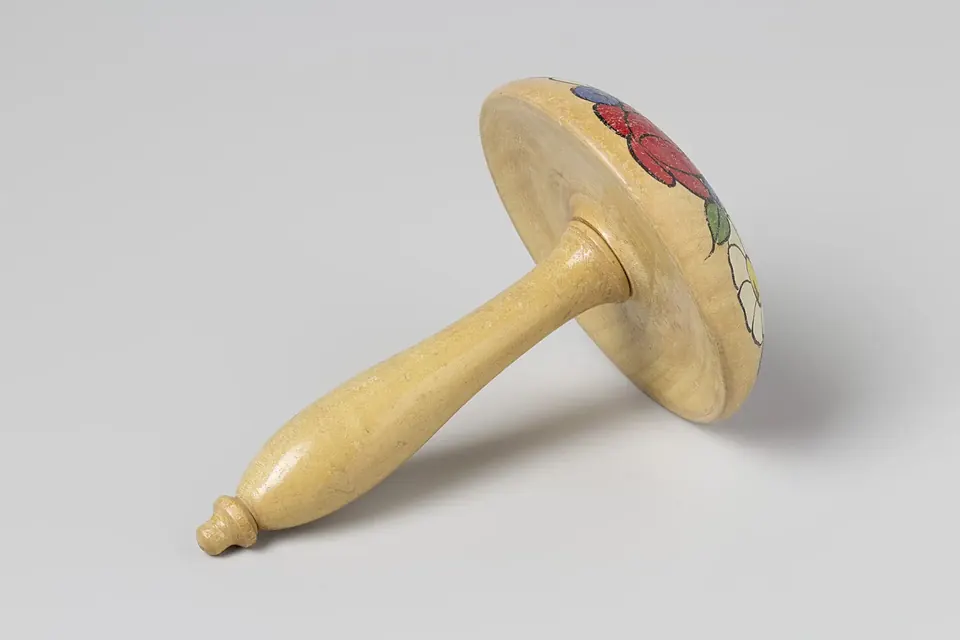
How to darn a hole in knitwear
A mushroom, a blunt needle and twenty quiet minutes: the old weave that saves a favourite jumper.
 Care & repair
How to read a care label
Tubs, triangles, squares, irons and circles: what each symbol really asks, and what it leaves out.
 Wardrobe
Better fashion habits
Wash cooler, dry flat, store well, mend early: twelve routines that add years.