How to get rid of clothes moths: find the larvae, clean, freeze and store wool so they do not come back
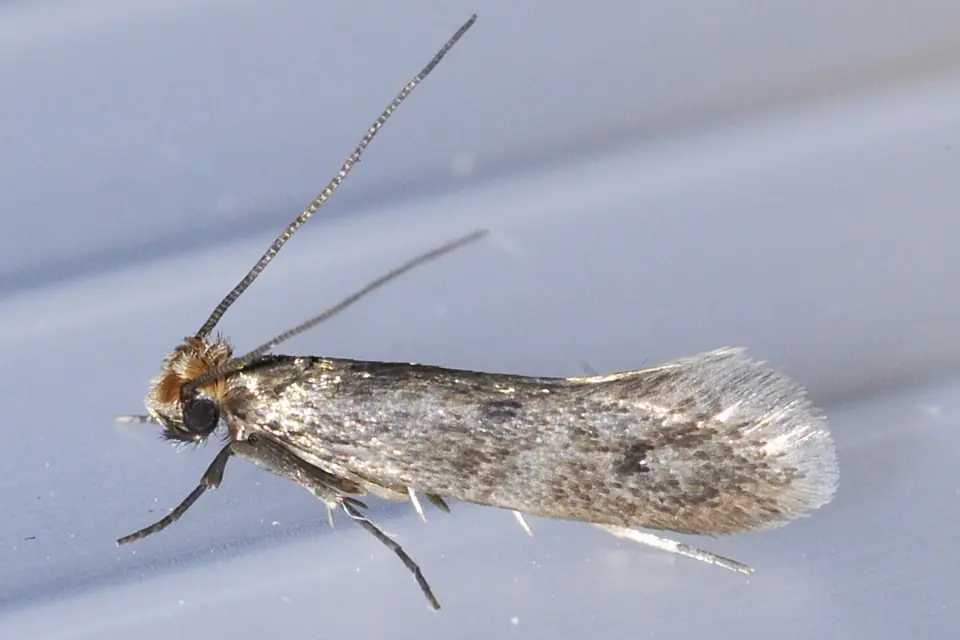
You find a neat little hole in a cashmere jumper, then another in a wool scarf, and somewhere at the back of the wardrobe a small, pale moth flutters off and disappears. By then the damage is done, and the moth you saw is not the culprit. Clothes moths eat nothing as adults; it is their larvae that chew through natural fibres, quietly, in the dark, for weeks or months. Getting rid of them is mostly a matter of finding those larvae, killing them with cleaning, heat or cold, and storing clothes so they cannot start again.
Know your enemy: the moth is not the problem
Two species do almost all the damage in homes: the webbing clothes moth (Tineola bisselliella, the one in the photo above) and the casemaking clothes moth (Tinea pellionella). Both are small, plain and easy to overlook. According to the University of Kentucky's entomology department, the adults do not feed at all and so cause no damage themselves; each female lays around forty to fifty tiny eggs on a suitable fabric, and the creamy-white caterpillars that hatch are the ones that eat.
What they eat is keratin, the protein in animal fibres: wool, cashmere and other hair, fur, silk, feathers, felt and leather. Cotton and synthetics are rarely attacked on their own, but blends that contain wool are fair game, and food, sweat or other stains make any fabric more attractive. The larvae like dark, undisturbed places, which is why the worst damage turns up on the jumper you put away in spring, the coat you only wear for weddings, or the wool rug under the sofa, rather than on clothes you wear every week.
Two quick checks tell you whether you have clothes moths or something else:
- Is it a pantry moth? Moths flying confidently around the kitchen or towards a lamp are usually food moths from flour, cereals or nuts. Clothes moths are weak flyers, are not drawn to lights, stay close to the infested item and flutter rather than fly in a straight line. University of California guidance also notes that at rest they are about half the length of most food moths.
- Is it a carpet beetle? Carpet beetle larvae eat the same fibres and leave similar holes. They are small and bristly and look nothing like the smooth white moth caterpillars. The treatment below works for both.
Find every source
Killing the moths you see while the larvae keep feeding gets you nowhere, so the first job is a thorough search. Empty the wardrobe and drawers that hold anything woollen, and check each piece in good light. Look along seams, under collars, inside cuffs and pockets, and in folds that have not been opened for months. The signs to look for:
- holes, or patches where the surface looks grazed and thin rather than worn;
- silky webbing or small tubes of silk mixed with fibres and droppings (webbing clothes moth);
- small open-ended cases the colour of the fabric, sometimes with a larva inside (casemaking clothes moth);
- droppings like grains of sand, often the same colour as the cloth, because the dyes pass straight through.
Then widen the search. Edges and undersides of wool rugs, the area under heavy furniture, upholstered chairs, felt hats, old blankets in a loft, a box of knitting yarn, a forgotten fur collar: any of these can be the colony that keeps reseeding your wardrobe.
A sticky pheromone trap is the best detector. The lure copies the scent of a female and catches males, so it tells you whether moths are still active, and several traps placed around the home show where the source is. Traps are specific to one species, and they catch only males: they confirm the problem and help you follow it, but they will not end an infestation on their own.
Kill the larvae and eggs
Each item you found, and everything stored with it, needs cleaning or cold. Heat, including a hot tumble dryer, also kills larvae, but it shrinks and felts most wool, so keep it for sturdy pieces whose label allows it.
Wash or clean it
Laundering or dry cleaning kills eggs and larvae and also removes the sweat and food traces that attract them. University of California pest specialists give the reference treatment as a wash of 20 to 30 minutes in water of at least 120 °F (about 49 °C). That is fine for cotton-wool blends and sturdy items whose label allows it, but far too hot for most knitwear, which will felt and shrink. Our guide to reading a care label tells you what each piece can take. For delicate wool and silk, use one of the other two methods or a professional cleaner; if you would rather avoid solvent dry cleaning, ask about wet cleaning, which we explain in how to break up with your dry cleaner.
Freeze it
Freezing is the gentlest way to treat a jumper you cannot wash hot. The University of Kentucky's guidance is to hold infested items at 0 °F (−18 °C) or below for at least one week; a colder freezer that reaches −20 °F (about −29 °C) kills all stages in about three days. The method matters as much as the temperature:
- Brush the garment outdoors first, to dislodge eggs and larvae.
- Seal it in a plastic bag, pressing out as much air as you can, so frost and condensation cannot form on the fibres.
- Leave it in the freezer for the full week. A few hours is not enough.
- Take it out and let it return to room temperature, still sealed, for about a day before opening the bag.
Treat everything from the same drawer or shelf, not just the pieces with holes: eggs are too small to see.
Clean the space they came from
While the clothes are out, vacuum the wardrobe, drawers and shelves thoroughly, including corners, cracks and the floor beneath. Lift the edges of wool rugs and vacuum both sides, and go along skirting boards and under furniture. Empty the vacuum bag or bin outside straight away, because it may contain eggs and larvae. Wipe the inside of drawers and wardrobes before putting cleaned clothes back.
Insecticide sprays have a limited role. Kentucky's entomologists treat products labelled for fabric pests as a supplement for rugs, carpet edges and the bottoms of closets, and advise against spraying infested clothing or bedding. For a heavy, persistent infestation, especially one coming from a loft, chimney or wall void, a professional pest controller is the better option.
Store wool so they cannot come back
Clothes moths are an opportunistic pest: they need time, darkness and an unwashed fibre. Take those away and they have nothing to work with.
- Clean before you store. Wash or clean every woollen before it goes away for the season. Worn wool carries sweat and skin traces that larvae prefer.
- Seal it. Use tightly closing plastic boxes or zipped bags, not open shelves or cardboard. A tight seal matters more than the material of the box.
- Disturb your clothes. Clothes in regular use are rarely attacked. Take stored knitwear out now and then, shake it, brush it and air it in daylight; larvae dislike light and fall off when disturbed.
- Keep a trap in the wardrobe through spring and summer, so you notice the first male rather than the first hole.
Cedar blocks, lavender bags and other herbal sachets are pleasant, but do not rely on them. Kentucky's entomologists write that cedar chests and closets are seldom effective because they are not sealed well enough to keep the oil at a concentration that repels or kills, and University of California guidance adds that cedar loses even that limited effect after a few years, while little is known about how well herbal repellents work. Traditional mothballs and crystals based on naphthalene or paradichlorobenzene are toxic, leave a strong smell, only work in an airtight container and may be restricted where you live; read the label and keep them well away from children and pets, or better, skip them.
Then repair the damage
A moth hole is rarely the end of a good jumper. Once the garment has been cleaned or frozen, a small hole can be closed with a woven darn, and a thin, grazed patch can be reinforced before it breaks; our beginner's guide to darning shows both. If the surface has gone fuzzy around the damage, a gentle de-pilling first, as described in how to remove pilling, makes the repair neater.
Moths are a symptom of clothes left alone in the dark. Wear them, clean them before storing, seal them, and check them often.
Sources
- University of Kentucky, Department of Entomology, Clothes Moths (ENTFACT-609): biology, inspection, freezing temperatures and durations, cedar and mothballs.
- University of California Statewide IPM Program, Pest Notes: Clothes Moths: identification, laundering temperature, storage, cedar and pheromone traps.
 Care & repair
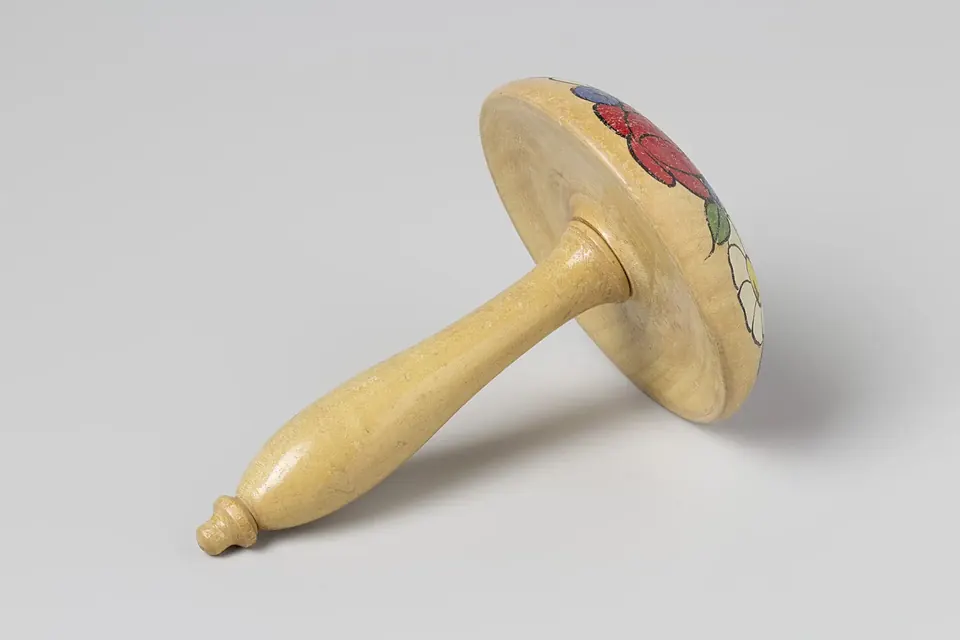
How to darn a hole in knitwear
A mushroom, a blunt needle and twenty quiet minutes: the old weave that saves a favourite jumper.
 Care & repair
How to remove pilling
Those little bobbles are not a sign that a jumper is finished. Why they form, how to take them off without thinning the knit, and how to slow them down.
 Care & repair
Break up with your dry cleaner
Why perc is being phased out, what wet cleaning is, and how to wash 'dry clean only' at home.