The stylist's guide to sustainable shopping for maximalists
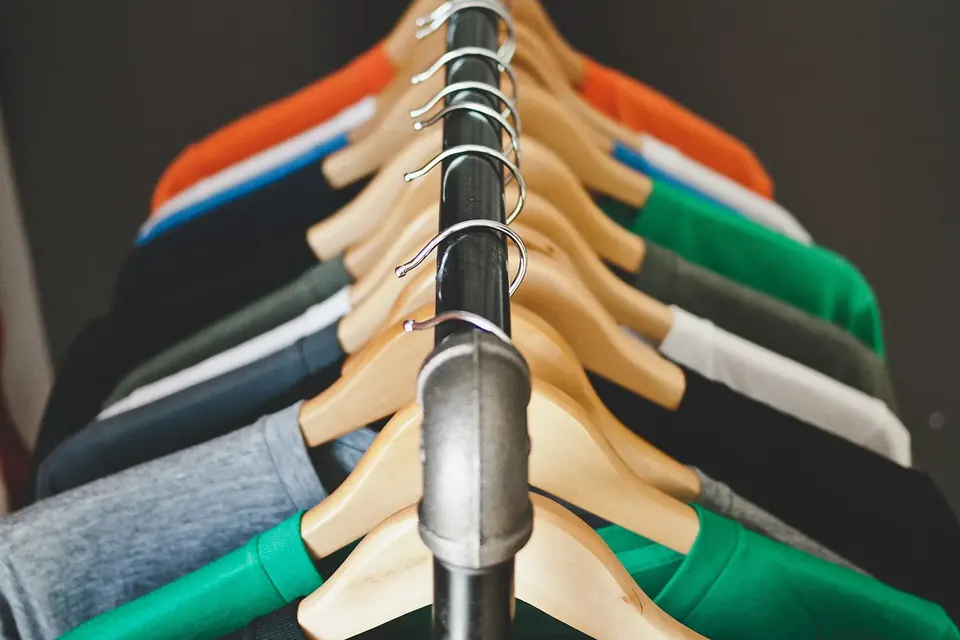
Much sustainable-fashion advice seems written for minimalists: a capsule of neutral basics, thirty-three items, everything matching. That suits some people. Others love colour, print, texture and the thrill of an unexpected combination. Good news for them: maximalism and sustainability are not opposites. The trick is to source boldly and buy rarely.
Why maximalists may have an advantage
Maximalist dressing is about combining, not accumulating. A wardrobe of distinctive pieces that clash on purpose can generate far more outfits than a rail of interchangeable basics, because every new combination looks different. Statement pieces also tend to be loved and kept: few people throw away the embroidered jacket that gets compliments. And maximalism is a natural fit for vintage, where one-of-a-kind pieces are the norm.
Where to find bold pieces responsibly
| Source | Best for | Tip |
|---|---|---|
| Vintage shops and markets | Prints, embellishment, unusual cuts from past decades | Go often; stock turns over constantly. Measure, do not trust old size labels. |
| Charity and thrift shops | Low-cost experiments with colour and pattern | Look in every section; a men's shirt or a children's scarf may be exactly the colour you want. |
| Resale platforms | Specific designers, eras or items | Save searches with precise keywords and sizes; ask for measurements. |
| Rental | Occasion wear, sequins, couture-level pieces worn once or twice | Check the cleaning, damage and delivery terms. |
| Swaps | Refreshing a wardrobe at no cost | Bring pieces in good condition; take only what you will wear. |
| Independent makers and made-to-order | Pieces built to your measurements in the colours you love | Longer wait, but no overproduction. |
Styling: get more from what you own
- Pattern mixing has rules you can break gradually. Start with prints that share one colour, or combine a large-scale print with a small one.
- Use a "bridge" piece. A jacket, scarf or belt that contains colours from two garments makes an unlikely pair work.
- Layer. A slip dress over a striped polo-neck, a waistcoat over a floral shirt, a skirt over trousers.
- Change proportion. The same blouse tucked into wide trousers and worn loose over a pencil skirt reads as two different looks.
- Accessories carry the drama. Vintage jewelry, scarves, hats and bags can transform basics; see our guide to ethical jewelry.
- Keep an outfit diary. Photograph combinations you love so you can repeat and remix them.
The maximalist's buying rules
- Three-outfit test: before buying a statement piece, picture three outfits with things you already own.
- Love it in a year: skip anything that feels tied to a single trend cycle; choose what feels like you.
- Quality of the fun part: embroidery, beading and prints should be well attached and finished, or they will not survive wear.
- Fit first: a dramatic piece that does not fit becomes a costume that never leaves the closet. Budget for alterations.
- Know what it needs: sequins, velvet and delicate silks often need special care. Make sure you are willing to give it.
Build a palette, not a pile
Stylists often work from a palette before they work from garments. Choose three or four colours you love wearing near your face, plus one or two "anchor" neutrals that are not necessarily beige: a deep brown, navy, burgundy or forest green can anchor a colourful wardrobe as well as black can. When everything shares at least one colour with the rest, almost any two pieces can be combined, and every new find has somewhere to go.
Pattern works the same way. Decide which families you are drawn to, such as florals, stripes, checks, geometric prints or animal prints, and look for scale contrast within them. A wardrobe of three or four pattern families in your palette can be mixed endlessly; a wardrobe of twenty unrelated prints tends to produce outfits that need a new purchase to work.
Second-hand finds worth hunting
- Printed silk scarves: plentiful in charity shops, cheap, and one of the fastest ways to add colour. They work as headscarves, belts, bag ties and tops.
- Embroidered and beaded jackets: often well made and rarely worn out; check that the embellishment is securely attached.
- Men's shirts in bold prints: worn open over a vest, knotted, or belted as a dress.
- Vintage knitwear: jacquards, intarsia and Fair Isle patterns in wool that has already proved it lasts.
- Statement coats: a coloured or patterned coat changes every outfit underneath it for a whole season.
- Household textiles: a quilt, curtain or tablecloth can become a jacket or skirt in the hands of a tailor; see our guide to upcycled fashion.
Caring for bold clothes
- Bright colours: wash inside out, in cool water, with similar colours; dry in the shade.
- Embellished pieces: hand-wash or spot-clean; store flat or on padded hangers, not crushed.
- Velvet: steam rather than iron; hang so the pile is not crushed.
- Vintage silks and rayons: test colourfastness before any wash; many need gentle hand-washing or a careful professional. Our guide on cleaning without perc explains the options.
- Prints that fade: fewer washes, more airing.
Editing a maximalist wardrobe
Maximalist does not mean unlimited. Once or twice a year, take everything out and ask of each piece: does it still delight me, and do I wear it? Pieces that no longer spark joy can be sold, swapped or passed on, so another maximalist can enjoy them. The guide to organising a closet works for colourful wardrobes too: store by colour and you will see new combinations every time you open the door.
Minimalism asks you to own less. Sustainable maximalism asks you to buy less, and wear everything louder.
Further reading
- Ellen MacArthur Foundation (2017), A New Textiles Economy, summary of findings, on clothing utilisation and resale and rental models.
- WRAP (2012), Valuing our clothes, on the benefits of keeping clothes in use longer.
 Wardrobe
Sustainable in the city
Markets, swaps, repair cafés, tailors and cobblers: the city as a circular wardrobe.
 Wardrobe
How to shop less
Audit, find the real gaps, slow the impulse, and buy fewer, better pieces.
 Materials & footprint
A sustainable gown for the red carpet
Archive pieces, deadstock silk, careful embellishment and a planned afterlife.